How Smart Lighting Systems Improve Comfort and Reduce Bills
Lighting has evolved far beyond simple switches and bulbs. Today’s smart lighting systems allow homeowners to control brightness, timing, and energy use more efficiently, creating spaces that are both comfortable and cost-effective. As electricity costs continue to rise, smart lighting is becoming a practical solution for households seeking convenience without increasing expenses.
By combining automation with energy efficiency, smart lighting systems help reduce waste while improving the overall living experience.
What Is a Smart Lighting System?
A smart lighting system uses connected lighting devices that can be controlled through mobile apps, voice assistants, timers, or motion sensors. These systems allow users to manage lighting remotely or automatically based on schedules and activity.
Typical components include:
- Smart LED bulbs
- Motion sensors
- Wireless switches
- Mobile app controls
- Voice assistant integration
- Automation hubs (optional)
Together, these elements create a responsive and efficient lighting environment.
How Smart Lighting Reduces Electricity Bills ⚡
One of the biggest advantages of smart lighting is its ability to minimize unnecessary energy usage.
Smart systems reduce electricity consumption by:
- Automatically turning lights off in empty rooms
- Adjusting brightness based on daylight availability
- Scheduling lighting according to daily routines
- Preventing lights from being left on overnight
Because smart lighting typically uses LED technology, it already consumes significantly less electricity than traditional bulbs.
Motion Sensors Eliminate Energy Waste
Motion-based lighting ensures lights operate only when needed.
Benefits include:
- Automatic activation when someone enters a room
- Automatic shutdown after inactivity
- Reduced reliance on manual switching
- Improved convenience in hallways and staircases
This feature alone can noticeably lower monthly electricity usage.
Remote Control Improves Everyday Comfort 📱
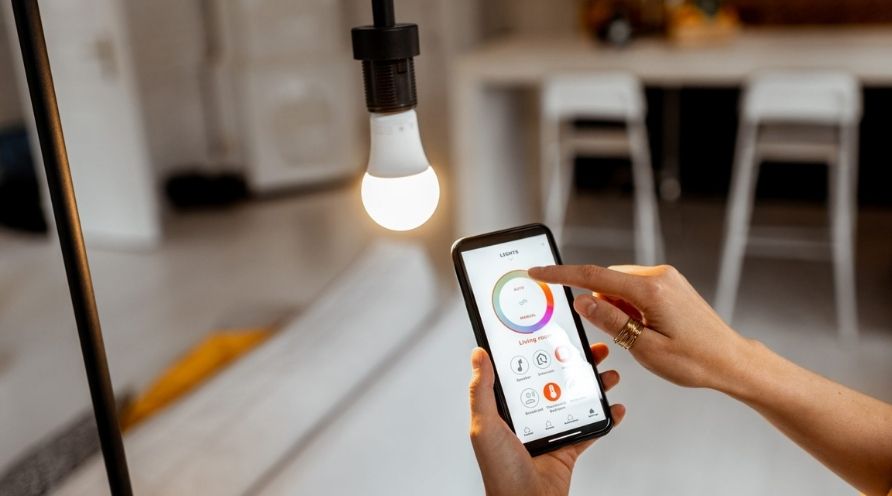
Smart lighting systems allow users to manage lighting from anywhere inside or outside the home.
Remote access enables:
- Turning off forgotten lights while away
- Adjusting brightness without leaving your seat
- Managing outdoor lighting securely
- Controlling multiple rooms simultaneously
This level of control improves both comfort and efficiency.
Adjustable Brightness Supports Energy Savings
Traditional lighting usually operates at a fixed brightness level. Smart lighting allows users to customize intensity depending on activity.
Lower brightness settings:
- Consume less electricity
- Extend bulb lifespan
- Reduce eye strain
- Improve nighttime comfort
Dimming lights when full brightness is unnecessary leads to steady long-term savings.
Smart Scheduling Matches Your Daily Routine ⏰
Automation is one of the most valuable features of smart lighting systems.
Scheduling allows lights to:
- Turn on before sunset automatically
- Switch off during sleeping hours
- Activate during waking routines
- Operate according to weekday and weekend patterns
This prevents unnecessary energy consumption without requiring manual adjustments.
Integration With Voice Assistants Enhances Convenience 🎙️
Smart lighting systems often work with voice-controlled home assistants.
Voice commands allow users to:
- Turn lights on or off instantly
- Change brightness levels
- Switch lighting scenes
- Control multiple rooms at once
Hands-free control improves accessibility for all age groups.
Smart Lighting Improves Home Security
Lighting automation can strengthen home security by creating the appearance of occupancy.
Security benefits include:
- Timed lighting when residents are away
- Motion-triggered outdoor illumination
- Improved visibility around entrances
- Reduced risk of unauthorized access
These features enhance safety without increasing electricity usage.
Long Lifespan Means Lower Replacement Costs 💰
Smart lighting systems typically use LED bulbs that last much longer than traditional alternatives.
Longer lifespan results in:
- Fewer replacements
- Reduced maintenance effort
- Lower long-term lighting expenses
- More reliable performance over time
Durability contributes significantly to overall cost savings.
Easy Installation Makes Smart Lighting Accessible
Many smart lighting solutions are designed for simple installation without major electrical modifications.
Common setup methods include:
- Replacing existing bulbs with smart bulbs
- Installing wireless switches
- Connecting devices through mobile applications
- Setting automation routines in minutes
This makes smart lighting suitable for both new homes and existing properties.
A Practical Upgrade for Modern Energy-Efficient Living
Smart lighting systems combine comfort, automation, and efficiency into one simple upgrade. By reducing unnecessary electricity usage while improving control and convenience, they offer a practical solution for households seeking smarter energy management without lifestyle changes.
As homes become more connected, smart lighting continues to play a central role in creating efficient and comfortable living environments.
Frequently Asked Questions (FAQs)
1. Do smart lighting systems require internet access to function?
Most smart lighting features work best with internet connectivity, though some basic functions may still operate locally without it.
2. Can smart lighting systems be installed in older homes?
Yes. Many smart bulbs and switches are compatible with existing wiring and fixtures.
3. Are smart lights compatible with regular wall switches?
Yes, but turning off the wall switch may disable smart control unless smart switches are installed.
4. Do smart lighting systems consume electricity even when turned off?
They use a very small standby amount of electricity, but overall savings remain significantly higher than traditional lighting systems.
5. Can smart lighting improve sleep quality?
Yes. Adjusting brightness and color temperature during evening hours can support healthier sleep routines.
6. Are smart lighting systems safe for children and elderly users?
Yes. Automation and voice control make them easier and safer to use compared to traditional switches.
7. Can smart lighting be expanded gradually over time?
Yes. Most systems allow additional bulbs and devices to be added whenever needed.