How to Choose the Right Linear Lighting Profile for Different Interior Projects
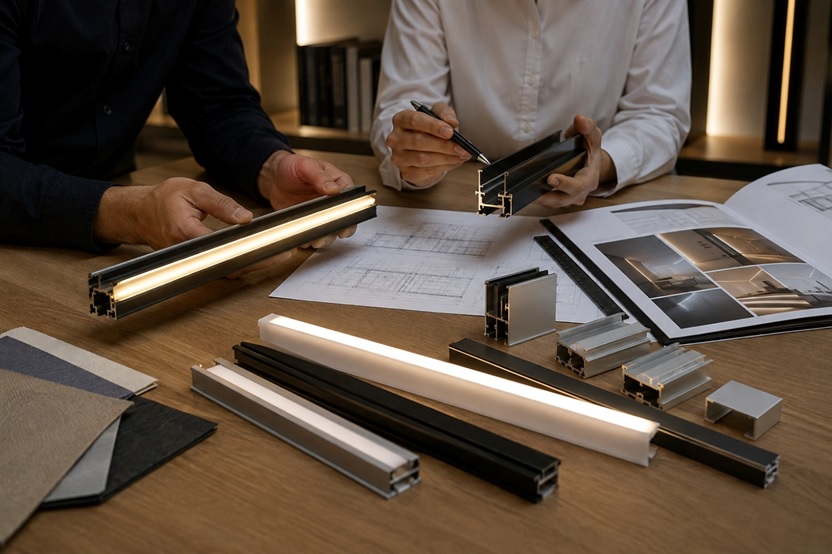
Choosing the right linear lighting profile is an important step in creating an efficient, durable, and visually appealing lighting system. From residential ceilings and kitchen cabinets to commercial offices, retail stores, hotels, and architectural interiors, the profile must work seamlessly with the LED strip, diffuser, power supply, and installation surface. A well-designed aluminum LED profile can support heat dissipation, protect the lighting components, reduce visible LED hotspots, and create a clean architectural finish. Understanding factors such as profile type, dimensions, mounting method, diffuser, LED output, and installation environment allows architects, interior designers, contractors, and lighting professionals to select a linear LED profile that matches the specific requirements of each project.
Why Choosing the Right Linear Lighting Profile Matters
A linear lighting system may appear simple, but its performance depends on several components working together. The LED strip produces light, while the profile provides the physical structure in which the lighting system is installed. The diffuser controls the appearance of the emitted light, and the power supply provides the required electrical energy. If these elements are not properly matched, the final installation may suffer from uneven illumination, excessive heat, visible LED points, or maintenance difficulties.
One of the primary functions of an aluminum lighting profile is thermal management. LED strips generate heat during operation, particularly when high-output strips are used for task lighting or commercial applications. Aluminum can transfer heat away from the LED components, helping maintain a more suitable operating environment. This makes the material particularly useful for architectural lighting systems that are expected to operate for extended periods.
The profile also protects the LED strip from physical damage, dust, and accidental contact. In addition, it creates a defined channel that makes installation more organized and visually consistent. When combined with a suitable diffuser, the profile can help transform individual LED points into a smoother and more continuous line of light.
However, not every profile is appropriate for every application. A recessed profile designed for a plasterboard ceiling may not be suitable for a cabinet installation, while a compact surface-mounted profile may not provide the dimensions or thermal capacity required for a high-output commercial system.
The installation surface is therefore one of the first factors to consider. Designers should determine whether the lighting will be integrated into a ceiling, wall, furniture, cabinet, partition, staircase, or another architectural element.
The desired visual effect is equally important. Some projects require the profile to remain visible as part of the design, while others aim for a completely integrated appearance in which only the light itself can be seen.
Understanding these differences makes it easier to choose the right profile before installation begins and can reduce the risk of costly modifications later.
Recessed Linear Profiles for Integrated Architectural Lighting
Recessed profiles are among the most popular solutions for modern architectural interiors because they can be integrated directly into ceilings, walls, furniture, and other surfaces. The main objective is to create a lighting line that appears to be part of the architecture rather than an additional fixture.
A recessed linear lighting profile is installed inside a prepared channel or opening. Once installation and finishing are complete, the profile can sit flush with the surrounding surface. This creates a clean appearance that works particularly well with minimalist and contemporary interior styles.
Ceiling applications are a common use for recessed linear systems. Designers can create straight lines, geometric patterns, continuous borders, or decorative lighting features. In gypsum board and drywall ceilings, the profile can be incorporated during the construction or finishing process to achieve a seamless result.
Recessed profiles can also be useful on walls. A vertical light line can emphasize the height of a room, highlight a particular architectural feature, or provide indirect illumination. Horizontal installations can be used to define wall sections or create decorative lighting details.
Furniture is another important application. Recessed profiles can be integrated into shelves, wardrobes, display units, and custom cabinetry. Because the profile is embedded into the furniture material, the final installation can look more refined than a visible surface-mounted fixture.
However, recessed installation requires accurate preparation. The dimensions of the profile, cutting channel, mounting accessories, and surrounding material must be coordinated before installation. Small dimensional errors can affect alignment and the visual quality of the final result.
The depth of the profile should also be considered. A deeper housing can provide greater distance between the LED source and diffuser, which may help create a more uniform appearance depending on the LED strip and diffuser being used.
For projects where architectural integration and a minimalist finish are priorities, a recessed linear LED profile can provide an effective solution, provided that the installation is properly planned.
Surface-Mounted Profiles for Flexible Installation
Not every interior project allows a recessed channel to be created. Renovation projects, finished surfaces, furniture modifications, and certain commercial installations may require a simpler solution. In these situations, surface-mounted profiles can provide greater flexibility.
A surface-mounted linear LED profile is installed directly onto the surface of a ceiling, wall, cabinet, shelf, or other architectural element. Because it does not require a deep recessed channel, installation can often be completed with less modification to the surrounding structure.
This makes surface-mounted profiles particularly useful for renovation projects. For example, a designer may want to add indirect ceiling lighting to an existing interior without opening or reconstructing the ceiling. A surface-mounted system can provide an alternative that minimizes structural changes.
Surface-mounted profiles are also useful in furniture and cabinetry. They can be placed beneath shelves, inside display units, along cabinet edges, or beneath kitchen cabinets. In these applications, the profile can provide both functional illumination and a decorative visual effect.
Another advantage is accessibility. Because the profile remains visible and accessible, inspection or replacement of the LED strip can be easier than with a fully concealed system.
The visible profile can also become part of the design. Depending on its shape and finish, an aluminum profile can complement modern furniture, metal details, or industrial-inspired interiors.
However, surface-mounted profiles should still be selected according to the application. A profile that is too small may not provide sufficient space for the chosen LED strip or adequate thermal management. The mounting surface must also be strong and suitable for the selected fixing method.
The diffuser remains an important component. A suitable diffuser can protect the LED strip while helping distribute the light more evenly. It can also influence the appearance of the profile and the amount of glare produced.
For flexible projects where construction changes should be minimized, surface-mounted profiles offer a practical combination of easy installation, accessibility, and contemporary design.
Choosing Profiles for Kitchens, Furniture, and Cabinet Lighting
Kitchen and furniture applications have specific requirements because lighting is often installed in relatively compact spaces. The profile must fit within the available dimensions while providing sufficient illumination and appropriate protection for the LED strip.
Under-cabinet lighting is one of the most common applications. A compact aluminum LED profile can be installed beneath kitchen cabinets to provide task lighting across countertops. In this application, the position and angle of the profile are important because the goal is to illuminate the work surface while minimizing unwanted glare.
For wardrobes and closets, linear lighting can improve visibility and create a premium interior appearance. Profiles can be installed vertically along cabinet sides or horizontally beneath shelves. The system should be selected according to the available space and the desired brightness.
Furniture manufacturers may also integrate linear profiles into shelves, display cabinets, desks, headboards, and entertainment units. In these applications, profile dimensions are particularly important because excessive profile size can interfere with the furniture design.
A suitable diffuser can help create a softer appearance and reduce the visibility of individual LEDs. This is especially important when the lighting is directly visible to the user.
The color temperature should also correspond to the intended environment. Warm or neutral white light is often selected for residential interiors, while the final choice should depend on the materials, color scheme, function, and overall lighting design.
Another consideration is heat. Even compact installations can generate heat, especially when high-power LED strips are used. The aluminum housing should therefore be appropriate for the selected LED output.
For kitchen and furniture projects, the best profile is not necessarily the largest or most powerful option. Instead, it is the profile that provides an appropriate balance between dimensions, illumination, thermal performance, installation requirements, and visual appearance.
Selecting Profiles for Offices and Commercial Spaces
Commercial projects generally require lighting systems that can operate for long periods while maintaining consistent visual performance. Offices, retail stores, hotels, restaurants, and public buildings may therefore require more careful planning than small residential installations.
In offices, linear lighting can be used for general illumination, decorative purposes, or to define specific areas. Recessed ceiling profiles can create continuous lighting patterns, while suspended systems can provide direct illumination over desks and meeting areas.
Retail environments often use linear systems to emphasize shelves, product displays, counters, and architectural features. The lighting should be selected according to the products being displayed and the desired visual effect.
Hotels and restaurants may prioritize atmosphere rather than maximum brightness. Indirect linear illumination can emphasize ceilings, walls, counters, and architectural details while creating a more comfortable environment.
For commercial projects, consistency between different sections is especially important. If multiple profiles are installed across a large area, differences in LED density, diffuser type, brightness, or color temperature can become visually noticeable.
Thermal performance and maintenance should also receive greater attention in high-use environments. An appropriately sized linear lighting profile can help manage heat while protecting the LED strip. At the same time, the system should allow practical access to components that may eventually require inspection or replacement.
Project managers and contractors should therefore evaluate the entire lighting system rather than selecting the profile independently from the LED strip and electrical components.
Understanding LED Strip, Diffuser, and Profile Compatibility
The best results are achieved when the profile and LED strip are treated as a complete system. The internal dimensions of the profile should accommodate the width of the LED strip, while the available space and aluminum body should be appropriate for the expected heat output.
LED density is another important consideration. A strip with widely spaced LEDs may produce visible points when installed close to a diffuser. In applications where a smooth light line is required, LED density, profile depth, diffuser characteristics, and installation distance should be evaluated together.
The diffuser also influences the final result. Different diffuser designs can affect light transmission, glare, and LED visibility. An opaque or frosted diffuser can help soften the appearance of the light source, although it may reduce some light output.
Electrical specifications should also match the intended installation. Wattage per meter, operating voltage, total length, power supply capacity, and wiring configuration all influence system performance. Long installations require particular attention to voltage drop and power distribution.
A high-quality linear lighting profile cannot compensate for an unsuitable LED strip or incorrectly designed electrical system. Instead, the profile should be considered one component within a complete lighting solution.
How to Select the Right Profile: A Practical Checklist
Before purchasing a profile, designers and installers can evaluate several key questions:
- Where will the profile be installed?
Determine whether the application is a ceiling, wall, cabinet, furniture element, staircase, or another surface. - Should the profile be visible or concealed?
Recessed systems are generally better for integrated architectural designs, while surface-mounted systems offer greater installation flexibility. - What LED strip will be used?
Check its width, power consumption, voltage, LED density, and expected operating temperature. - How much illumination is required?
Task lighting and general illumination may require higher-output systems than decorative applications. - What type of diffuser is appropriate?
Consider light distribution, LED visibility, glare, and the desired visual effect. - What are the environmental conditions?
Moisture, dust, temperature, and frequency of use can influence component selection. - How will the system be maintained?
Consider whether the LED strip, driver, and other components can be accessed when necessary. - Is the profile compatible with the overall design?
Dimensions, finish, installation depth, and geometry should complement the architectural concept.
Following this checklist can help prevent common selection mistakes and ensure that the chosen aluminum lighting profile supports both the technical and aesthetic objectives of the project.
Working with an Experienced Aluminum Profile Manufacturer
The quality of the final lighting installation depends not only on design but also on the manufacturing quality of its components. Dimensional accuracy, material quality, extrusion consistency, and compatibility with LED lighting components are important considerations when selecting a supplier.
An experienced manufacturer can help professionals identify suitable profiles for different applications and project requirements. This can be particularly valuable for large-scale architectural projects where consistency across multiple installations is essential.
aluminiumpishro provides aluminum-based solutions for linear lighting applications, supporting projects that require practical and architectural lighting profiles. By considering factors such as profile dimensions, installation method, LED compatibility, thermal requirements, and diffuser selection, professionals can develop lighting systems that are both visually refined and technically appropriate.
The goal should not simply be to choose the most attractive profile. Instead, the profile should be selected as part of a complete lighting system designed around the project’s function, environment, materials, and long-term requirements.
Conclusion
Choosing the right linear lighting profile requires more than comparing shapes and dimensions. The ideal solution depends on the installation method, LED strip specifications, diffuser, thermal requirements, environment, and desired architectural effect. Recessed profiles are suitable for seamless and integrated designs, while surface-mounted options provide greater flexibility for renovations, furniture, and other applications. In kitchens, wardrobes, offices, retail stores, hotels, and residential interiors, a properly selected linear LED profile can improve light distribution, protect LED components, and contribute to a cleaner finished appearance. By evaluating the complete lighting system and working with an experienced manufacturer such as aluminiumpishro, architects, designers, and contractors can select an aluminum lighting profile that delivers the right combination of performance, durability, and modern architectural aesthetics.