AST Construction in Beaumont, TX: Building for the Golden Triangle’s Industrial Demands
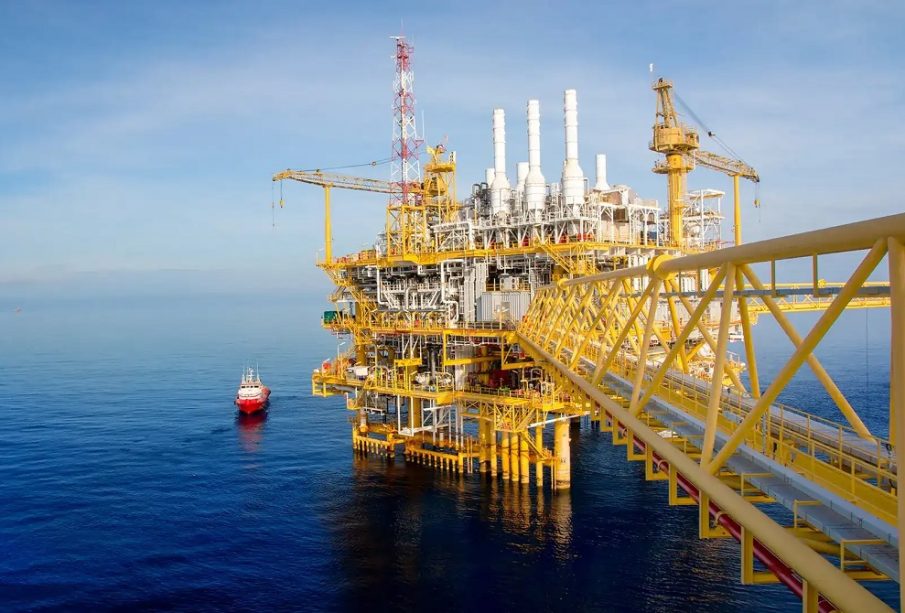
Beaumont occupies a distinctive position in the Texas industrial landscape. Anchored by one of the highest concentrations of refining capacity in the United States and surrounded by the chemical processing facilities, pipeline terminals and fuel distribution infrastructure that define the Golden Triangle region, Beaumont sits in the middle of an energy corridor where aboveground storage tank construction is a constant and consequential activity. Building tanks here isn’t simply a matter of applying standard API practices and hoping for the best. It requires a contractor and an owner who both understand what the local environment, the local regulatory climate and the local industrial context demand from a storage tank before the first plate hits the ground.
The Golden Triangle’s Industrial Footprint and What It Means for AST Work
The Beaumont-Port Arthur-Orange triangle hosts some of the largest refining and petrochemical assets on the Gulf Coast. ExxonMobil’s Beaumont refinery is among the highest-capacity refineries in the country, and the surrounding region includes a web of pipeline interconnections, tank farms, chemical plants and export terminals that make this one of the most logistically complex industrial environments in Texas. For AST contractors, that density of industrial activity means working alongside active operations on tight site constraints, coordinating with other contractors competing for the same labor pool and meeting the more rigorous quality and safety standards that major refining clients and their third-party auditors require.
It also means that the range of products stored in tanks across the Beaumont market is exceptionally broad. Crude oil, refined fuels, heavy fuel oil, petrochemical feedstocks, lubricants, sulfur and a long list of specialty chemicals all find their way into storage tanks across this region. Each product category brings its own engineering requirements, coating specifications, vent sizing considerations and regulatory classification. Contractors who work regularly in the Golden Triangle develop familiarity with this range that’s genuinely difficult to replicate without direct experience in the market.
Environmental Conditions That Shape Construction Decisions in Beaumont
Beaumont’s physical environment is among the most demanding on the Texas Gulf Coast for steel structures of any kind. The city receives more annual rainfall than virtually any other major Texas market, regularly topping fifty inches per year, which keeps ambient humidity elevated for much of the year and creates chronic moisture exposure conditions for tank exteriors, foundations and secondary containment structures. That persistent moisture load drives external corrosion and coating degradation at rates that need to be factored into both the initial specification of coating systems and the long-term maintenance planning that starts at the design table, not after commissioning.
The region’s soil conditions present serious engineering challenges that distinguish Beaumont from many other Gulf Coast markets. The deep, high-plasticity clay soils common across Jefferson County are notoriously reactive to moisture changes, swelling when wet and contracting when dry in seasonal cycles that impose differential movement on foundations and tank bottoms. Settlement under large-diameter tanks can be significant even on well-designed foundations, and the potential for differential settlement across the tank footprint requires foundation engineers to design carefully and specify monitoring programs that catch developing problems before they compromise tank geometry or shell integrity.
Hurricane exposure is the third major environmental factor that shapes construction decisions in this region. Beaumont sits within the historical landfall zone for Gulf Coast storms and has experienced direct and near-direct hits from major hurricanes within recent memory. Wind loading requirements for tank design in this region need to reflect actual historical storm intensity rather than minimum code provisions, and anchorage calculations for tanks that might otherwise rely on product weight for stability need to be evaluated against the uplift forces a major storm can generate on an empty or partially filled tank.
Regulatory Requirements for AST Construction in Southeast Texas
AST construction in Beaumont operates within Texas’s state regulatory framework alongside federal requirements that apply at facilities above defined storage and product thresholds. The Texas Commission on Environmental Quality administers tank registration and spill prevention requirements for petroleum and regulated chemical storage, and Jefferson County’s industrial density means TCEQ has an active presence in the region with familiarity with local facility operations that owners and contractors should factor into their compliance planning.
API 650 governs the design and construction of welded steel atmospheric storage tanks for petroleum service and is the standard that most large field-erected tanks in the Beaumont market are built to. Understanding which edition of the standard applies to your project, how local soil and wind conditions affect the design inputs, and how supplemental requirements from your insurance carrier or facility owner layer on top of the API minimums is work that needs to happen in the engineering phase, not during fabrication. Gaps in standard interpretation that show up during construction or inspection are expensive to resolve after the fact.
For facilities storing oil above EPA thresholds, the Spill Prevention, Control and Countermeasure rule requires a written SPCC plan certified by a licensed professional engineer. Secondary containment structures built as part of new AST construction need to be sized and constructed in compliance with SPCC requirements, which in Beaumont’s rainfall environment means designing for both the regulatory volume requirements and the freeboard necessary to handle major precipitation events without containment overflow. Given the region’s rainfall record, treating the freeboard calculation as a serious engineering exercise rather than a minimum-standard checkbox is both prudent and defensible to regulators.
Foundation Engineering for Beaumont’s Challenging Soils
No aspect of AST construction in Beaumont demands more site-specific engineering judgment than the foundation. The high-plasticity clays that underlie much of the region’s industrial areas are capable of generating substantial differential settlement under large tank loads, and the consequences of inadequate foundation design show up in out-of-round shells, bottom plate stress and compromised roof seals that require expensive corrective work. Getting the geotechnical investigation right at the start of the project is the most cost-effective investment a tank owner can make.
A thorough geotechnical program for a new AST in this region should include soil borings at multiple locations across the tank footprint, laboratory testing to characterize the plasticity, compressibility and shear strength of the subsurface materials, and a settlement analysis that addresses both total and differential settlement expectations under the full hydrostatic test load and the long-term operating load. The geotechnical report findings drive the foundation design, and a foundation engineer who understands how to interpret Beaumont-area soil reports and has experience with comparable projects in Jefferson County brings value that generic geotechnical experience doesn’t fully substitute for.
Ringwall foundations are standard practice for larger tanks in this market and provide the load distribution and perimeter stiffness needed to manage differential settlement in soft clay conditions. The interior pad within the ringwall requires careful attention to fill material quality, compaction standards and moisture conditioning, since the clay soils in this region are sensitive to the moisture content at which they’re compacted. Internal cathodic protection systems, typically sacrificial anodes or an impressed current system, need to be integrated into the foundation design from the beginning. Retrofit cathodic protection on a tank already in service is significantly more disruptive and expensive than building it in during initial construction, and Beaumont’s soil chemistry makes bottom protection a genuine necessity rather than an optional enhancement.
Tank Configuration and Material Considerations
Tank type selection in the Beaumont market follows the same general logic as elsewhere in the Gulf Coast refining corridor, but local conditions influence some of the details worth considering during the design phase. Fixed cone roof tanks serve atmospheric storage applications well for products with low vapor pressure and continue to be common for diesel, lube oil and certain chemical storage applications across the region’s industrial facilities. Their relative simplicity makes them easier to maintain and inspect, which matters in a high-humidity environment where maintenance intervals tend to be compressed compared to drier climates.
External floating roof tanks are widespread across the large-volume crude oil and refined product storage applications that define the Beaumont tank farm landscape. The combination of emissions reduction and vapor loss prevention that floating roofs provide makes them the configuration of choice for volatile products in regulated service. In Beaumont’s weather environment, external floating roof maintenance demands specific attention. The roof seals, drain systems and roof structure are all exposed to the same rainfall intensity, wind loading and UV exposure that the rest of the tank faces, and specifying robust seal designs and high-drainage-capacity roof drain systems during construction reduces the maintenance burden and operational risk the owner carries through the tank’s service life.
Material selection for tank components should account for the specific corrosivity of the stored product and the external environment. Carbon steel is the baseline for most petroleum service tanks in this market, but coating and lining specifications deserve serious attention during the design phase. External coating systems in Beaumont’s high-humidity coastal environment need to be selected for resistance to moisture permeation and salt exposure, not just for the dry-environment performance characteristics that some coating specifications default to. Consulting a coatings engineer with Gulf Coast experience during specification development is worth the engagement cost.
Field Erection Practices and Quality Assurance
Large ASTs built in Beaumont are field-erected, with shell plates, roof components and structural members assembled and welded in place on the completed foundation. The field erection sequence for a large-diameter tank is a carefully orchestrated process that requires experienced supervision, a qualified welding workforce and a quality assurance program capable of documenting every weld, test and inspection activity in a format that satisfies both the API 650 standard requirements and the owner’s project-specific documentation expectations.
Beaumont’s industrial environment means AST construction often takes place on or adjacent to active facility operations, which adds safety coordination complexity that straightforward greenfield sites don’t present. Hot work permitting, confined space procedures, simultaneous operations protocols and interface coordination with facility operations teams are all part of doing this work safely in a refinery or terminal environment. Contractors who work regularly at Beaumont-area facilities understand these requirements and have the safety management systems to execute in that environment. Contractors who don’t have that background can struggle with the coordination demands even when their technical tank-building capabilities are otherwise adequate.
Weld inspection requirements under API 650 include radiographic or ultrasonic examination of shell seams at frequencies the standard specifies based on tank size and design. All welds on the tank bottom, shell and roof receive visual inspection, and the hydrostatic test performed at construction completion is the final verification that the completed structure performs as designed. Settlement readings taken during the hydrotest are particularly important in Beaumont given the region’s soil characteristics, and the owner and engineer should establish clear criteria before the test begins for what settlement patterns are acceptable and what would require foundation remediation before the tank enters service.
Selecting a Contractor With the Right Regional Experience
The Beaumont market has experienced contractors who know how to build tanks in the Golden Triangle environment and others who bring more generic credentials without the regional depth that this market specifically rewards. When you’re evaluating contractors for a new AST project in Beaumont, regional experience isn’t a soft preference. It’s a concrete indicator of how prepared a contractor is for the soil conditions, weather exposure, regulatory environment and industrial site coordination demands that define tank construction in Jefferson County.
Ask specific questions about projects the contractor has completed in Southeast Texas. Find out how they approach foundation monitoring during hydrostatic testing and what their standard practice is for cathodic protection integration in high-clay-content soil environments. Ask how they handle design coordination when site-specific soil conditions require departures from standard foundation configurations. The answers to those questions reveal whether a contractor’s regional experience is genuine or incidental.
Quality documentation practices are a reliable indicator of contractor capability at any location, but they carry particular weight in a market where major refining clients and third-party auditors scrutinize project records carefully. A contractor who produces complete, organized, defensible project documentation isn’t doing you a favor. They’re meeting the minimum standard for work performed to a construction code in a regulated environment, and a contractor who treats that expectation as burdensome is telling you something worth knowing before you sign the contract.
Beaumont’s industrial sector demands a lot from its storage infrastructure, and the tanks built there carry significant operational and environmental consequences if they’re not built correctly. The investment in getting the engineering, the contractor selection and the construction execution right from the beginning pays returns through every year of a tank’s service life.