7 Compact Plum Trees That Make Growing Simpler, As Advised by a UK Orchard Specialist
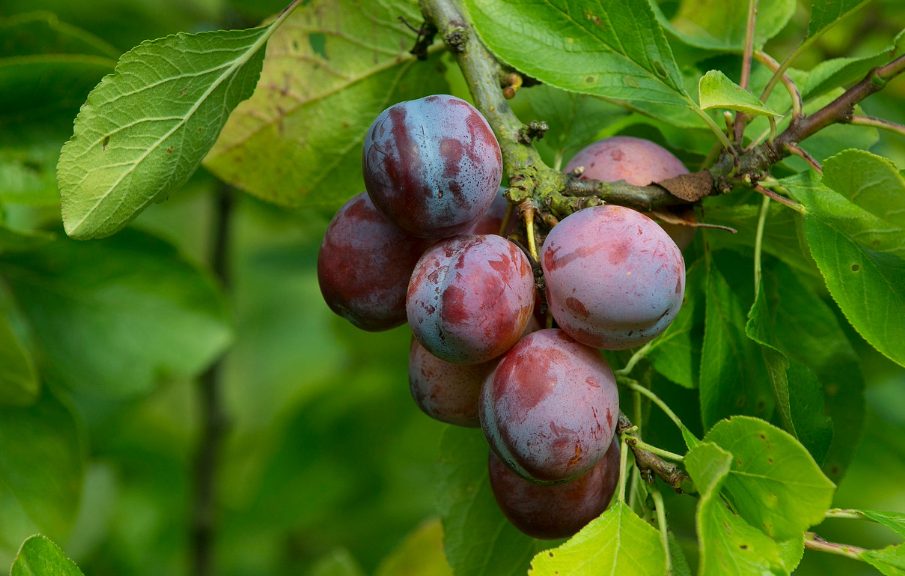
Compact plum trees suit smaller plots, urban gardens, patios, and modern planting schemes where every square metre has to work harder. They also make routine tasks simpler, from netting against birds to thinning fruit and picking ripe plums without ladders.
The main advantage of a compact plum tree is not simply size. It is control. A smaller tree is easier to shape, easier to protect in spring, and easier to keep productive year after year. For many households, that means a better crop with less wasted effort. Gardeners who want to buy dwarf plum trees often do so because they need something reliable rather than ambitious: a tree that fruits well, fits into an ordinary garden, and does not become difficult after a few seasons.
The fruit trees specialists at Fruit-Trees nursery advise that compact plums are often the most sensible starting point for home growers because they allow better light, simpler pruning, and easier harvesting than vigorous traditional forms. For gardeners looking to buy dwarf plum trees, choosing the right rootstock and variety combination matters more than simply picking the smallest tree available.
What makes this especially relevant in the UK is the range of growing conditions. A gardener in Kent, a suburban grower in Manchester, and a patio gardener in Bristol may all want the same thing from a plum tree: good flavour, dependable cropping, and a manageable shape. Compact varieties can answer that need, but only when the choice is practical rather than purely decorative. Some have sweeter dessert fruit, some are better for cooking, and some cope with cooler districts better than others. The right choice depends on how the tree will be used, not just how it looks on the label.
Why Compact Plum Trees Work So Well in British Gardens
Traditional orchard trees have their place, but most home gardens are not orchards. Space is limited, neighbouring fences reduce airflow, and many people want fruit that can sit alongside lawns, borders, sheds, or raised beds. Compact plum trees solve several of these common problems at once. Their smaller frame means less shading over flower beds and vegetables, while their shorter reach makes routine care realistic for people who do not want specialist equipment.
In practical terms, compact trees also help with disease management. A tree that stays open and proportionate is easier to prune for airflow, which matters in damp British weather. Better airflow reduces the chance of fungal problems building up in crowded branches. The fruit is also easier to inspect, which means damaged or diseased plums can be removed quickly before they affect the rest of the crop.
Another benefit is that compact plums are often quicker to fit into the rhythm of an ordinary garden. They can be trained against a wall, grown in a large container, or used as freestanding trees in modest lawns. That flexibility matters for gardeners who are trying to combine fruit growing with family space, ornamental planting, or a paved courtyard. A vigorous tree that wants to dominate a site can become a burden. A compact one is far more likely to remain part of the garden rather than taking it over.
Harvesting is where the difference becomes obvious. A smaller tree means less bruised fruit dropped from height and less guesswork over whether plums at the top are actually ripe. When fruit can be picked by hand from the ground or with minimal reach, gardeners are more likely to gather it at the right moment. That improves flavour and reduces waste.
Compact trees are also a good fit for beginners because mistakes are easier to correct. A missed pruning session, a slight imbalance in shape, or a modest overcrop is less damaging on a restrained tree than on a vigorous one. That margin for error makes them more forgiving and, in turn, more enjoyable. Gardening tends to continue when success feels achievable. Compact plums give many growers exactly that.
The Seven Compact Plum Trees Worth Considering
Among compact plum trees, a few varieties stand out for combining manageable growth with worthwhile fruit. Victoria remains one of the most familiar choices in Britain for good reason. It is dependable, widely available, and useful in the kitchen as well as for eating when fully ripe. On a modest rootstock or with regular pruning, it can stay within a size that suits many domestic gardens.
Opal is another strong option, especially for gardeners who want sweet fruit early in the season. It is often valued for flavour more than storage life, which suits households that like to pick and eat straight from the tree. Its manageable habit and reliable performance make it one of the best compact choices for mixed-use gardens.
Jubilee has become popular with growers who want larger fruit and a tree that still behaves sensibly in a home setting. It offers an appealing balance between crop quality and manageable size. For gardeners who want a plum that feels productive without being unruly, it deserves serious attention.
Czar is often recommended where cooking is the priority or where the garden is in a cooler location. It is hardy, practical, and less fussy than some dessert-focused varieties. The fruit has a different use profile from sweeter plums, but for crumbles, jams, and kitchen use, it is a strong candidate.
Mirabelle de Nancy is a slightly different proposition. It brings small, richly flavoured golden fruit and a neat habit that suits gardeners looking for something distinctive without needing a large site. It can be especially rewarding for those who prefer preserving or specialist culinary uses.
Guinevere is a useful later-season choice. It helps spread the harvest and can suit growers who do not want all the fruit arriving at once. A longer picking window can make home fruit growing more manageable, especially for busy households.
Denniston’s Superb is worth considering for gardeners who want flavour and a somewhat old-fashioned quality in a tree that can still be kept under control. It may not be the first variety everyone mentions, but it earns its place through taste and character.
These seven are not identical, and that is the point. Simpler growing does not come from choosing the smallest tree in the catalogue. It comes from matching habit, harvest time, flavour, and garden conditions in a way that reduces future effort.
Choosing the Right Tree for Space, Soil and Use
A compact plum tree only stays simple if it matches the site. This is where many gardeners make avoidable mistakes. They choose by fruit colour, by memory of a favourite plum, or by what looks easiest to buy, without considering soil, exposure, and practical use. A tree meant for a lawn edge behaves differently from one grown in a container on a patio or trained against a warm wall.
Soil matters first. Plum trees prefer fertile, moisture-retentive but well-drained ground. In very light soil, growth can be weak unless organic matter is added and watering is consistent. In heavy clay, a compact tree can still succeed, but drainage and planting technique need care. Planting too deep or into waterlogged ground will slow establishment and may shorten the tree’s productive life.
Sunlight matters almost as much. Plums crop best in a bright, sheltered position. In Britain, shelter is often more useful than absolute heat because spring blossom can be damaged by cold winds and late frosts. A south- or west-facing site often helps, though a good open position with reasonable light can still work well. Compact trees are easier to fleece or protect in a cold snap, which is another reason they simplify growing.
Use should guide variety. If the household mostly bakes, a cooking plum may be far more useful than a delicate dessert sort, however attractive the latter sounds in a catalogue. If children will pick fruit from the garden, sweetness and easy access matter. If preserving is the main goal, heavy cropping and concentrated flavour may rank above appearance. The best choice is not the variety with the strongest reputation overall, but the one most likely to be used.
Container growing is increasingly common, and some gardeners specifically buy dwarf plum trees for that reason. It can work well, but only with realism. The pot must be large, watering must be steady, and feeding cannot be forgotten in midsummer. Container trees are convenient, but they are also more dependent on the grower. Simplicity comes from access and scale, not from neglect. A compact tree in the ground is often easier in the long run than a tree in a pot that dries out every warm week.
The Orchard Specialist’s Advice on Making Plum Growing Simpler
An orchard specialist would usually start with a point that sounds plain but is often ignored: easier growing begins before planting. If the tree goes into the wrong site or is allowed to develop a congested structure early on, every later task becomes more complicated. A compact plum should therefore be seen as a managed fruiting system rather than as a small ornament that happens to bear plums.
The first part of that system is shape. A well-spaced framework of branches makes almost everything else easier. Light reaches the fruit, air circulates more freely, and the weight of the crop is spread more sensibly. This does not require advanced pruning skills. It requires consistency. Remove awkward crossing growth, avoid overcrowding the centre, and keep the tree balanced rather than tall.
The second part is crop management. Compact plum trees can still overfruit. When that happens, branches bend, plums stay undersized, and the tree may become irregular in future years. Thinning, where needed, is an underrated way to keep both the crop and the tree in good order. Many gardeners resist it because removing fruit feels wasteful, but a smaller, better crop is usually the smarter result.
The third part is timing. Plums are not apples in the way they are managed. They should generally be pruned in active growth rather than in winter, which reduces certain disease risks. Watering matters most during establishment and during dry spells when fruit is swelling. Feeding should support steady health rather than force soft, excessive growth.
Protection is also simpler on compact trees. Netting against birds, where lawful and safe, is easier to fit properly. Blossom can be covered in a frost-prone spell more easily than on a large tree. Wasp-damaged or spoiled fruit can be spotted and removed quickly. All of this reduces losses without turning the garden into a technical project.
The broader lesson is that compact growing is not about lowering standards. It is about reducing wasted effort. A tree that can be understood at a glance, maintained from the ground, and harvested without strain is not a compromise. In a domestic setting, it is often the better design.
Planting, Watering and Pruning Without Making It Complicated
The simplest successful routine starts with good planting. A plum tree should go in when the soil is workable and not waterlogged or frozen. Bare-root trees, where available in season, often establish well and can be good value. Container-grown trees offer more flexibility, but both need the same fundamentals: a proper planting hole, improved soil structure where needed, and a final depth that leaves the graft point clear above soil level.
After planting, watering needs to be regular during the first growing seasons. Compact trees may be small, but their root systems are still establishing. A dry spring or warm early summer can slow them quickly. Deep, occasional watering is usually more useful than constant light sprinkling. Mulching helps conserve moisture and suppress weeds, though the mulch should not be heaped against the trunk.
Feeding need not be elaborate. A balanced spring feed and annual organic matter around the root zone are enough for many gardens. Overfeeding is a common mistake, especially in fertile soil. Excess nitrogen produces lush growth that can be more susceptible to problems and less useful for stable fruiting.
Pruning is where many people become uncertain, but compact plums are often easier than expected. The goal is not to create a textbook diagram. It is to keep the branch structure open, healthy and within reach. Summer pruning suits plums better than dormant-season cutting in many cases. Remove dead wood, congested growth, and branches that spoil the shape. Keep cuts clean and moderate. Heavy intervention usually reflects earlier neglect rather than good routine.
Support can matter too. A young tree in an exposed spot may need staking while it establishes. Branches carrying a heavy crop may need temporary support to prevent splitting. Because compact trees are more accessible, these small interventions are straightforward and worthwhile.
Good maintenance should feel repeatable. If the care routine seems too elaborate to continue year after year, it is probably the wrong routine. Simpler growing comes from habits that can be sustained: checking moisture, watching the developing crop, and correcting problems before they build up.
How to Get Better Harvests From Smaller Trees
A smaller tree does not automatically mean a smaller return in practical terms. In fact, compact plum trees often produce more usable fruit for the average household because less is lost, bruised, missed, or left to spoil overhead. Yield should be judged by what reaches the kitchen in good condition, not only by what hangs on the branches.
Pollination is one factor. Some plum varieties are self-fertile, which is helpful in small gardens where space for more than one tree is limited. Others benefit from a pollination partner. Knowing this before planting avoids disappointment later. Even self-fertile trees often crop better when pollinating insects are active and conditions during blossom are favourable. A wildlife-friendly garden with early flowers nearby can support that process.
Frost protection can make a noticeable difference. Because compact trees are easier to cover, they give gardeners a realistic chance of saving blossom during a cold spring night. That is one of the less glamorous but most useful advantages of restrained size. On a large tree, protection may be theoretical. On a compact one, it is often practical.
Ripeness also deserves attention. Plums do not all ripen evenly, and picking too early sacrifices flavour. A compact tree allows repeated light harvests rather than one rushed pick. Fruit can be tested gently and gathered as it softens and colours properly. This staged harvesting often improves the eating experience and prevents waste.
Pest and disease control is more manageable too. Fallen fruit can be collected promptly. Damaged plums can be removed before they attract more trouble. Leaves and branches can be checked without strain. None of these tasks is difficult, but on a large tree they are less likely to happen consistently.
In the end, compact plum trees suit the way many people now garden. They fit smaller spaces, modern routines, and realistic levels of maintenance. More importantly, they shift fruit growing away from the idea that success depends on scale. It does not. It depends on choosing a tree that stays workable, suits the site, and rewards steady care. For British gardeners who want fruit without complication, these seven compact plum trees offer a sensible place to start.